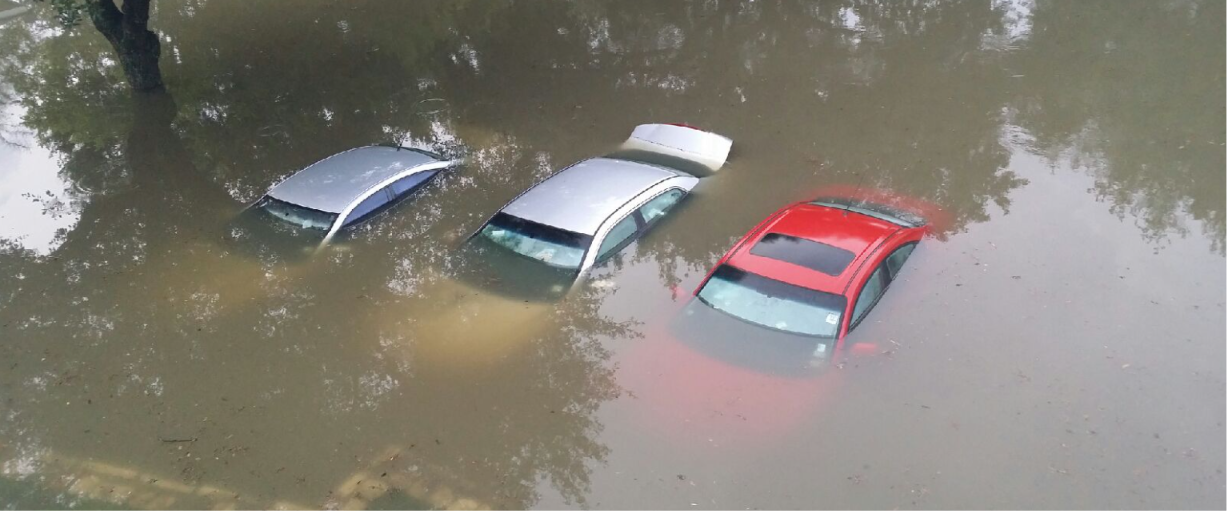

Water does not need a hurricane to total a car. A stalled creek after a hard rain, a parking lot that floods every time it storms, or a named storm that pushes three feet of water down a Charlotte or Charleston street can all do the same thing to a vehicle’s title and its value. If your car has ever touched floodwater, whether it was repaired perfectly or not, you are dealing with a flood title diminished value problem the moment that history shows up on a vehicle report, and most Carolina drivers do not find out how much that costs them until they try to sell.
How Water Damage Actually Gets Recorded
When an insurer pays a claim for flood damage and the repair cost crosses the state’s total loss threshold, the vehicle gets branded with a flood title. That brand is permanent. It travels with the VIN through every future Carfax report, every AutoCheck pull, every dealer trade-in appraisal, for the life of the car.
But total loss is not the only path. A huge number of flood-damaged vehicles never get branded at all. The car floods, the owner or the insurer decides repair costs stay under the threshold, the vehicle gets dried out and fixed, and it keeps its clean title. On paper, nothing changed. In the market, everything changed, because vehicle history services are increasingly good at flagging flood zip codes, storm dates, and insurance claim data even when no formal brand was issued.
A car with a clean title and a documented flood repair in its history is not the same, in a buyer’s eyes, as a car that was never touched by water. Both situations create diminished value. Only one of them comes with an obvious warning label.
Why Flood Damage Hits Value Harder Than Collision Damage
Collision damage is visible, contained, and mechanical. A bumper, a fender, a door panel. Water does not respect panel lines. It gets into wiring harnesses, control modules, seat foam, carpet padding, and HVAC systems, and it keeps causing problems long after the car looks and drives fine.
This is the core reason flood history scares buyers more than an equivalent dollar amount of collision damage. Corrosion inside electrical connectors can take months or years to surface as a failure. Mold in carpet padding is expensive to fully remove and often never fully leaves. Sensors tied to ADAS features, airbags, and transmission control can fail intermittently in ways that are hard to diagnose and even harder to prove were caused by the flood.
- Buyers and dealers routinely walk away from a flood-branded vehicle regardless of the asking price
- Insurers may exclude or limit coverage on vehicles with a documented flood history
- Financing is harder to secure, similar to salvage and rebuilt title vehicles
- Resale value drops even when every system tests fine at the time of sale
Hurricane Season and the Carolina Flood Problem
Both North Carolina and South Carolina sit directly in the path of Atlantic hurricane activity, and inland flooding from storms that have already made landfall elsewhere causes just as much vehicle damage as the initial coastal surge. Storms like Florence and Helene left thousands of vehicles sitting in standing water for days, and many of those cars quietly reentered the used car market with clean titles and undisclosed histories.
This is not only a coastal issue. Charlotte, Columbia, Greenville, and inland river corridors across both states have seen significant flash flooding events that had nothing to do with a named storm. A car parked in the wrong low-lying lot during a heavy summer thunderstorm can end up with the same underlying damage as a car caught in a hurricane surge.
If you bought a used vehicle in the Carolinas any time after a major storm event, running a full vehicle history report is not optional. It is the only way to know whether the car you own has a flood event in its past that was never disclosed.
What a Flood History Costs You at Resale
The value hit from flood history is generally steeper than comparable collision damage because buyers cannot fully verify the extent of the problem, and they price in the uncertainty, not just the known repairs.
| Vehicle History | Typical Resale Impact | Buyer Financing |
|---|---|---|
| Clean title, no flood record | Full market value | Standard financing available |
| Clean title, undisclosed flood repair | Discovered later; can trigger legal dispute | May be denied retroactively |
| Flood title, repaired | 40% to 60% below comparable clean title | Very limited, mostly cash buyers |
| Flood title, unrepaired | Salvage value only | Not financeable |
These ranges shift depending on make, model, and how thoroughly the repair was documented, but the direction never changes. Flood history removes buyers from the pool and pushes the remaining buyers toward much lower offers.
Diminished Value Claims After a Partial Flood Repair
If your car flooded, was repaired, and kept its clean title because the repair cost stayed under the total loss threshold, you may still have a legitimate diminished value claim, the same way you would after a covered collision. The vehicle was damaged, it was repaired, and its market value dropped because of documented history. That is the definition of diminished value.
The claim path depends on how the damage happened. If the flood damage came from a covered peril under your own comprehensive policy, first-party diminished value rules apply, and coverage varies significantly by carrier and by policy language. If a third party’s negligence caused the flooding, such as a poorly maintained storm drain on a commercial property or a landlord’s failure to address known drainage issues, a third-party claim may be possible.
Comprehensive coverage typically pays for flood repair, but whether it also covers the diminished value that follows is a separate question you need to ask your carrier directly. Do not assume it is included.
Whichever path applies to your situation, an independent professional appraisal is the only reliable way to put a real number on the loss. Understanding how documented damage affects resale value gives you the baseline before you talk to an adjuster or a buyer.
Buying a Used Car in the Carolinas: How to Protect Yourself
Whether you are shopping for a car right now or trying to figure out what you already own, a few checks go a long way toward catching flood history before it costs you.
- Pull a full vehicle history report. Carfax and AutoCheck both flag flood titles and, increasingly, geographic flood event data tied to storm dates.
- Check for a musty smell or damp carpet padding. Air fresheners and detailing can mask odor temporarily, but persistent dampness under carpet or in the trunk is a warning sign.
- Inspect for water lines. Look under the dash, inside door panels, and under the spare tire for silt lines or corrosion at a consistent height.
- Test every electrical system. Power windows, infotainment, climate control, and warning lights should all be tested slowly, not just glanced at during a test drive.
- Ask directly about storm history. A seller or dealer is required to disclose known flood damage in most cases. Ask the question directly and get the answer in writing.
If you already own the vehicle and just discovered undisclosed flood history, your recovery options depend heavily on how the vehicle was sold to you and what disclosures were legally required. That is a separate legal question from the diminished value claim itself, but the appraisal you get to document market loss is useful in both conversations. Our overview of North Carolina damage disclosure and title rules covers what sellers are required to tell you.
Why an Independent Appraisal Matters More With Flood History
Insurers evaluating a flood-related diminished value claim tend to lean even harder on formula-based tools than they do with collision claims, partly because flood damage cases are less common and there is less internal precedent for adjusters to work from. That makes an independent, defensible number even more important.
A qualified appraiser looks at actual comparable sales for vehicles with similar history, not just book value adjusted by a flat percentage. That distinction is the difference between a settlement that reflects the real Carolina used car market and one that reflects whatever number is easiest for the insurer to defend internally.
Think Your Vehicle Has Undisclosed Flood History?
Get a free quote to find out what your diminished value claim could be worth. Or read the full article online for more details. Get Your Free Quote
Download the PDF version of this guide:
flood-title-diminished-value-carolina.pdf
Frequently Asked Questions
Does a flood title mean the car cannot be driven?
A flood title alone does not always mean the car is undrivable, but many states require inspection before a flood or salvage branded vehicle can be legally registered again. Requirements vary by state, and some flood titled vehicles are never cleared for road use at all.
Can I file a diminished value claim if my car flooded but kept a clean title?
Yes, in many cases. If the flood damage was repaired and the vehicle’s history now shows the event even without a formal title brand, the market still discounts the car. That drop in value is diminished value, and it may be recoverable depending on how the flooding occurred and what coverage applies.
How can I tell if a used car I am considering has hidden flood damage?
Pull a vehicle history report, inspect for water lines and corrosion under the dash and door panels, test every electrical system carefully, and check for persistent musty odor. No single check is definitive, so combine several before making a decision.
Does comprehensive insurance cover diminished value from flood damage?
Comprehensive coverage typically pays to repair flood damage, but whether it also covers the resulting diminished value depends on your specific policy and carrier. Some policies exclude first-party diminished value entirely. Contact your carrier directly and get the answer in writing before assuming coverage applies.
Is flood damage diminished value harder to claim than collision diminished value?
It can be, mainly because insurers have less standardized precedent for flood-related valuations compared to collision claims. This makes an independent professional appraisal even more important, since it gives you a defensible number instead of relying entirely on the insurer’s internal formula.