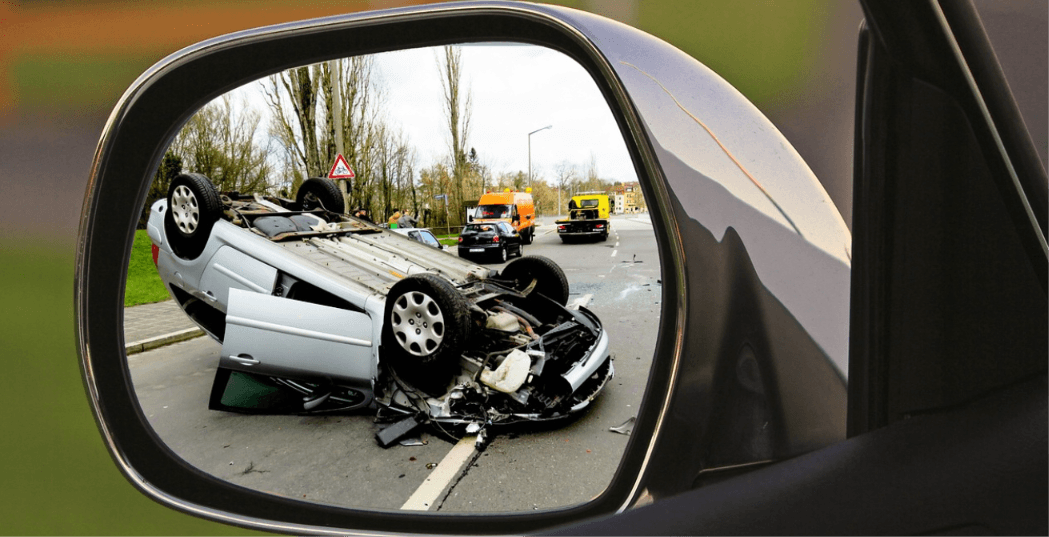

North Carolina has the fourth-highest hit-and-run crash rate in the entire United States, running 224% above the national average. South Carolina is not far behind, with hit-and-run incidents climbing steadily in metropolitan areas like Charleston and the Upstate. For drivers left dealing with vehicle damage after a hit-and-run, the financial fallout goes beyond repairs. Your car now carries an accident history that reduces its market value, and the person responsible is gone. The question every Carolina driver in this situation needs answered is whether a diminished value claim is still possible when there is no at-fault driver to file against, and if so, how to pursue it.
The answer depends on your insurance coverage, your state, and how quickly you act. This guide breaks down every path available to North Carolina and South Carolina drivers after a hit-and-run, from UM/UIM claims to what happens if the driver is eventually identified.
The Hit-and-Run Problem in the Carolinas by the Numbers
Hit-and-run crashes are not rare edge cases. In North Carolina alone, over 11,700 hit-and-run incidents were reported in a single recent year, resulting in more than 5,600 injuries and 62 fatalities. The state’s rate of 5.34 hit-and-run accidents per 100,000 licensed drivers places it among the worst in the country.
The contributing factors are well documented: congested metro corridors in Charlotte, Raleigh, and the Triangle; high rates of uninsured drivers; and the simple reality that fleeing a scene is easier in heavy traffic. In South Carolina, urban areas like North Charleston, Columbia, and Greenville report disproportionately high numbers, and the state requires every auto policy to include uninsured/underinsured motorist (UM/UIM) coverage for exactly this reason.
For the drivers left behind, the damage is real and measurable. Your vehicle needs repairs, those repairs create an accident history, and that history reduces what your car is worth on the open market. That reduction is your diminished value, and it does not disappear just because the person who caused it drove away.
How a Hit-and-Run Changes Your Insurance Claim Path
In a standard accident where the at-fault driver is known, you file a third-party claim against their liability insurance. That is the cleanest path to recovering both repair costs and diminished value. In a hit-and-run, that path closes, at least temporarily.
When the at-fault driver is unidentified, your recovery shifts to your own insurance policy. Specifically, it falls under your uninsured motorist (UM) coverage. This is a first-party claim, meaning you are filing against your own insurer rather than the other driver’s.
That distinction matters for diminished value because most UM policies were not written with DV in mind. The coverage is designed to step in when the at-fault driver has no insurance or cannot be found. Whether it extends to diminished value depends on your specific policy language and, in some cases, how aggressively you push the claim. Understanding the mechanics of a first-party diminished value claim in the Carolinas is essential before you engage with your own adjuster.
In South Carolina, UM/UIM coverage is mandatory on every auto policy. In North Carolina, UM/UIM is also required unless you explicitly reject it in writing. If you did not sign a waiver, you almost certainly have it.
Does UM/UIM Coverage Include Diminished Value?
This is the central question, and the answer is not a simple yes or no. It depends on the policy, the state, and the insurer.
North Carolina
North Carolina law does not explicitly require UM coverage to include diminished value. However, UM coverage is intended to put you in the same position you would be in if the at-fault driver had adequate liability insurance. If a third-party liability claim would have included diminished value (and in NC it generally can), the argument follows that UM coverage should as well. Some insurers have paid DV under UM coverage when the policyholder presented a strong case with an independent appraisal. Others have denied it on initial review and paid after the claim was escalated.
South Carolina
South Carolina’s UM statute is broadly worded. The coverage is designed to compensate for damages you would have recovered from the at-fault driver. Since diminished value is a recognized component of property damage in SC, the pathway for including it under UM coverage exists. As with NC, success depends on policy language, the strength of your documentation, and whether you have a professional appraisal to back the claim.
| Scenario | Claim Type | DV Recovery Likelihood |
|---|---|---|
| Hit-and-run, driver never found | First-party UM claim | Possible but depends on policy language and documentation |
| Hit-and-run, driver later identified with insurance | Third-party liability claim | Strong path in both NC and SC |
| Hit-and-run, driver identified but uninsured | UM/UIM claim | Similar to unknown driver scenario; policy dependent |
| Standard accident, at-fault driver known and insured | Third-party liability claim | Strongest path for DV recovery |
What to Do Immediately After a Hit-and-Run
The actions you take in the first hours after a hit-and-run directly affect your ability to recover anything, including diminished value. Here is what Carolina drivers should prioritize:
- Call 911 and file a police report immediately. In North Carolina, N.C. Gen. Stat. Section 20-166 requires reporting any accident involving injury or significant property damage. In South Carolina, S.C. Code Section 56-5-1210 applies. A police report is the foundation of every subsequent claim.
- Document everything at the scene. Photos of the damage, the location, any debris left by the other vehicle, skid marks, and surrounding traffic cameras. If witnesses saw the vehicle or captured any part of the plate, get their contact information.
- Report the claim to your insurer promptly. Most policies require timely notification. Delaying the report can give your insurer grounds to deny or reduce coverage.
- Do not authorize repairs until you have documented the damage thoroughly. Pre-repair photos, the full damage estimate, and any supplemental findings during disassembly all become evidence for your diminished value claim later.
- Get an independent diminished value appraisal. This is critical regardless of whether the driver is found. If you file under UM, you need a defensible number. If the driver is found later, you need the same. The diminished value calculator gives you a preliminary estimate before committing to a full appraisal.
When the Hit-and-Run Driver Is Found
If law enforcement identifies the driver, your claim landscape changes immediately. Assuming the driver has active liability insurance, you now have a third-party claim available. This is the same path you would have had in any standard not-at-fault accident, and it is the strongest route to recovering diminished value in both NC and SC.
Even if weeks or months have passed, you can still file a third-party DV claim as long as you are within the statute of limitations (three years for property damage in both states). The quality of your claim at that point depends on the documentation you gathered early: the police report, repair records, photos, and your appraisal.
If the driver is found but has no insurance, you circle back to your UM/UIM coverage. The claim process is essentially the same as the unknown-driver scenario, with the added benefit that you now have a named at-fault party, which can strengthen your position when negotiating with your own insurer.
Do not assume the driver will never be found. Surveillance cameras, dashcam footage, and witness reports lead to identifications weeks or even months after the incident. Build your file as though you will eventually have a third-party claim, because you might.
Why the Appraisal Matters More in a Hit-and-Run
In a standard third-party claim, the at-fault driver’s insurer has a financial obligation they cannot easily avoid. In a hit-and-run filed under your own UM coverage, your insurer is both the party paying the claim and the party evaluating it. That is a structural conflict of interest.
Your insurer has every incentive to minimize what they pay. They will use their own internal tools, apply conservative valuations, and often decline DV on the first pass. An independent appraisal changes the dynamic. It gives you a documented, defensible number that your insurer cannot simply override with their own formula.
For vehicles with significant damage, recent model years, low mileage, or high pre-accident value, the diminished value figure can be substantial. Knowing how to prove and maximize your diminished value claim is the difference between a denied request and a paid settlement.
If you are not sure whether the damage to your vehicle warrants a formal claim, even seemingly minor collisions can produce measurable drops in resale value. The connection between small damage and significant value drops is well documented in the Carolina market.
North Carolina’s Contributory Negligence Complication
One factor worth addressing for NC drivers specifically: North Carolina’s contributory negligence rule. Under this doctrine, if you contributed to the accident in any way, you can be barred from recovering damages. In a hit-and-run, this is rarely an issue because the other driver committed a crime by leaving the scene. Your own fault, if any, would need to be independently established, and in most hit-and-run scenarios the evidence points entirely at the fleeing driver.
That said, if the police report or any evidence suggests shared fault, be aware that contributory negligence could come into play if the driver is later found and you pursue a third-party claim. South Carolina’s modified comparative fault system is more forgiving, allowing recovery as long as you were less than 51% at fault, with your compensation reduced proportionally.
Involved in a Hit-and-Run? Find Out What Your Claim Is Worth.
Get a free estimate from Carolina’s most trusted vehicle appraisers. Whether the driver was found or not, we can help you understand your options. Get Your Free Quote
Download This Article as a PDF
Save or share this guide for reference. Download PDF
Frequently Asked Questions
Can I file a diminished value claim after a hit-and-run if the driver is never found?
You may be able to file under your uninsured motorist (UM) coverage, depending on your policy language. UM coverage is designed to compensate you for damages an at-fault driver would have been liable for. Some insurers in NC and SC have paid diminished value under UM claims when the policyholder presented strong documentation and an independent appraisal. Others have required escalation or dispute before paying.
Is UM/UIM coverage required in North Carolina and South Carolina?
South Carolina mandates UM/UIM coverage on every auto policy. North Carolina also requires it unless the policyholder signs a written rejection. If you did not explicitly opt out in writing, you almost certainly have UM coverage on your policy.
What if the hit-and-run driver is found months later?
If the driver is identified and has liability insurance, you can file a standard third-party diminished value claim against their coverage. Both NC and SC allow three years for property damage claims, so as long as you are within that window, the claim is viable. The strength of your case depends on the documentation you collected early, which is why building your file immediately after the incident matters regardless of whether the driver is known.
Does contributory negligence in NC affect my hit-and-run DV claim?
In most hit-and-run cases, contributory negligence is not a practical barrier. The other driver committed a crime by leaving the scene, and your own fault would need to be independently established. However, if any evidence suggests shared fault in the underlying collision, be aware that NC’s contributory negligence rule could limit a third-party claim if the driver is eventually found.
Do I need a police report to file a diminished value claim after a hit-and-run?
A police report is not technically required to file a DV claim, but it is practically essential for a hit-and-run. The report establishes the circumstances of the incident, documents that another driver was involved and fled, and creates the official record that supports your UM claim. Without it, your insurer has far more room to question or deny the claim.