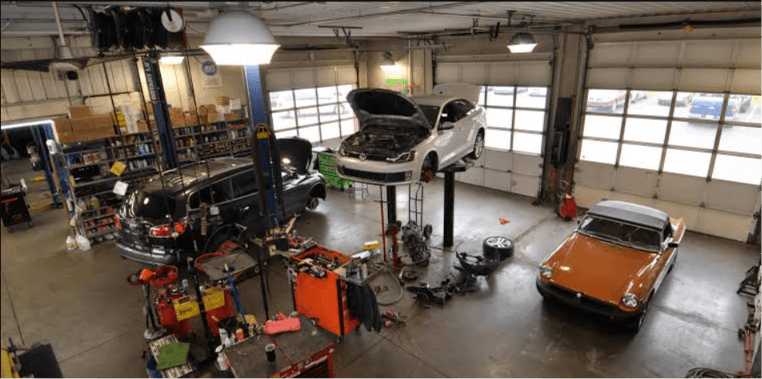

Your car is at the body shop and has been for six weeks because a bumper reinforcement is on backorder. The at-fault driver’s insurer paid for a rental for ten days and then cut it off. Most Carolina drivers accept that and move on. They should not. A loss of use claim is a separate category of damages owed by the party who caused the accident, and it does not disappear because a rental authorization expired. It sits alongside the repair payment and the diminished value payment as a third recoverable loss, and almost nobody asks for it.
Parts availability has made this a much bigger issue than it was three years ago. The delay is no longer the exception. It is the pattern.
Why Repairs Are Taking Longer in 2026
Industry reporting from this spring documents collision shops waiting longer for parts, insurers writing off more vehicles rather than repairing them, and a growing number of drivers paying out of pocket to avoid filing smaller claims at all. Roughly 44% of the OEM collision parts sold in the United States are manufactured overseas, which ties your bumper cover to a supply chain that has been anything but stable.
Layer in modern vehicle technology. Sensor housings, camera brackets, radar modules, and the calibration work that follows all extend the repair plan. A job that would have taken eight days on a 2015 model can run three weeks or longer on a 2023 one, and that is before a single part goes on backorder.
Every additional day your vehicle sits at the shop is a day you are deprived of something you own and are still paying for. That deprivation has a dollar value, and the party who caused it is the party responsible for it.
What Loss of Use Actually Means
Loss of use is compensation for being deprived of the use of your vehicle during the period reasonably required to repair or replace it. It is not the same thing as the rental car benefit on your own policy. Rental reimbursement is a coverage you purchased, subject to a daily cap and a total limit. Loss of use is a category of damages owed by the at-fault party under general principles of property damage.
The practical distinction matters. Your rental coverage might pay $30 a day for 30 days and stop. If the reasonable repair period ran 50 days, the remaining 20 days are still a loss you suffered. And if you never rented a car at all because you borrowed a relative’s truck or rearranged your life around a single household vehicle, you were still deprived of your property for the full period.
The most common misconception
Drivers routinely assume that not renting a car means there is nothing to claim. The loss is the deprivation of use itself, not the receipt from a rental counter. Whether that argument gets paid depends on your documentation, the carrier, and the facts of your situation, but declining to make the argument guarantees the answer is no.
Three Separate Losses From One Accident
Drivers tend to think of an accident claim as one payment. It is not. Here is how the three property damage components separate out:
| Component | What It Compensates | Who It Ultimately Benefits |
|---|---|---|
| Repair payment | Cost to restore the vehicle | The repair facility |
| Loss of use | Deprivation during the repair period | You, for time without the vehicle |
| Diminished value | Permanent market value loss from the record | You, at resale or trade in |
Only one of those three ends up in the shop’s account. The other two belong to you, and both are routinely left unclaimed because the adjuster has no obligation to volunteer them.
How the Reasonable Repair Period Gets Decided
Carriers do not simply pay for every day the car was at the shop. The standard they apply is the period reasonably necessary to complete the repair, which becomes the fight when parts are delayed.
An insurer will argue that a shop’s scheduling backlog or a delay caused by waiting on supplement approval is not their responsibility. A well documented file pushes back on that. What tends to move the number:
- The shop’s dated repair plan and supplement history. This shows when work was authorized and when it actually started.
- Written parts order records showing backorder dates. A backordered part with a documented order date is very different from a shop that simply took its time.
- The date the vehicle was delivered and the date it was released. Basic, and frequently missing from the file.
- Correspondence showing delays in adjuster approval. If a supplement sat unapproved for eleven days, that is not a shop delay.
- A reasonable daily rate for a comparable vehicle. Comparable means similar class and utility, not the cheapest economy car on the lot.
The same discipline that supports a value loss claim supports this one. A file built to prove and maximize a diminished value claim already contains most of what a loss of use argument needs.
North Carolina and South Carolina Differences
North Carolina
North Carolina applies contributory negligence, which is unforgiving. If any share of fault is assigned to you, recovery from the other driver’s liability carrier can be barred entirely, and that applies to loss of use exactly as it applies to a diminished value claim in North Carolina. Establish clean fault first, then pursue the components.
South Carolina
South Carolina applies modified comparative fault. If you were less than 51% responsible you can pursue the claim, with the award reduced by your assigned share. A 15% fault assignment on a documented $1,500 loss of use figure leaves $1,275 recoverable.
In both states, if you are dealing with a rental vehicle rather than your own car, the mechanics change again. We covered that scenario in our guide to how rental companies handle diminished value claims.
When the Delay Turns Into a Total Loss
There is a second outcome worth watching for. Rising parts costs and calibration requirements are pushing more damaged vehicles across the total loss threshold instead of into the repair stream. A car that sat waiting on parts for a month can end up written off after a supplement reveals more damage.
If that happens, the loss of use period does not vanish. You were still deprived of the vehicle while the carrier decided. The claim shifts, though, and the central fight becomes the actual cash value of the vehicle rather than the repair. Our sister resource on how insurers calculate total loss value covers how those numbers get built and where they go wrong.
What to Do Starting Today
- Log the date your vehicle went in and the date it comes out. Photograph the intake paperwork.
- Ask the shop in writing for parts order dates and backorder confirmations. Request them as they happen, not at the end.
- Keep every rental receipt, and note the days you had no vehicle at all. Both matter, for different reasons.
- Put your loss of use position to the adjuster in writing. A verbal request that was never documented is a request that never happened.
- Handle the value loss claim in the same file. The repair invoice, the photos, and the timeline that support one support the other.
Both claims run against the same statute of limitations, which is generally three years for property damage in North Carolina and South Carolina. Practically speaking, the file is strongest while the shop still has the records and the market comparables are close to the date of loss.
One Accident, More Than One Loss
Most Carolina drivers recover the repair and leave the rest on the table. Get a free quote and find out what the full claim is worth. Get Your Free Quote
Download this guide as a PDF
Take the documentation checklist with you to the body shop. Download the PDF
Frequently Asked Questions
What is the difference between loss of use and rental reimbursement?
Rental reimbursement is a coverage you bought on your own policy, with a daily cap and a total limit. Loss of use is a category of damages owed by the at-fault party for depriving you of your vehicle during the period reasonably required to repair it. They can overlap, but one is a purchased benefit and the other is a recoverable loss.
Can I claim loss of use if I never rented a car?
The loss is being deprived of the use of your property, not the rental receipt. Drivers who borrowed a vehicle or went without one were still deprived for the full repair period. Whether a given carrier pays that depends on your documentation and the facts of your situation, but not raising it guarantees you receive nothing for it.
How many days will an insurer pay for?
Carriers apply the period reasonably necessary to complete the repair, not simply the total time the car spent at the shop. Documented parts backorder dates, the dated repair plan, and any delay in supplement approval are what shift that number in your favor.
Does a loss of use claim affect my diminished value claim?
They are separate components of the same property damage claim and pursuing one does not reduce the other. They rely on overlapping evidence, which is why it makes sense to build a single, well organized file covering repair records, the timeline, and the market value loss.
Can I still claim loss of use if my car was declared a total loss?
You were deprived of the vehicle while the carrier evaluated it, so the period does not simply vanish. The claim changes shape though, because the central issue becomes the actual cash value of the vehicle rather than the repair timeline.
Does contributory negligence in North Carolina apply to loss of use?
Yes. North Carolina’s contributory negligence rule applies to the property damage claim as a whole. If fault is assigned to you, recovery from the other driver’s carrier can be barred, and that affects loss of use and diminished value alike. Confirm how fault was recorded before building a strategy around either one.