
Hurricane season runs June through November, and forecasters are calling for a below-average year in 2026, with NOAA projecting 8 to 14 named storms compared to the historical average of 14. That sounds like good news, and in terms of raw storm count, it is. But a quieter season does not mean a safer one for the Carolinas specifically. Forecasters have flagged the Carolinas as one of the regions facing higher-than-average risk of direct impact this year, and the danger that matters most for your vehicle has less to do with wind speed and everything to do with water.
If a storm floods your car this season, or if you are shopping for a used vehicle in the months after one, understanding how a flood title works in North Carolina and South Carolina is the difference between protecting your investment and getting stuck with a permanent, expensive mistake.
Why a Quiet Hurricane Season Still Means Real Risk
The 2026 forecast calls for fewer named storms overall, largely driven by developing El Niño conditions that tend to suppress storm formation across the Atlantic basin. But forecasters have been consistent on one point all year: fewer storms does not mean less danger for any single coastline. Warmer sea surface temperatures near Central America and the Caribbean are supporting storms that intensify rapidly and give less warning before landfall, and the Carolinas remain among the areas flagged for higher-than-average direct impact risk this season.
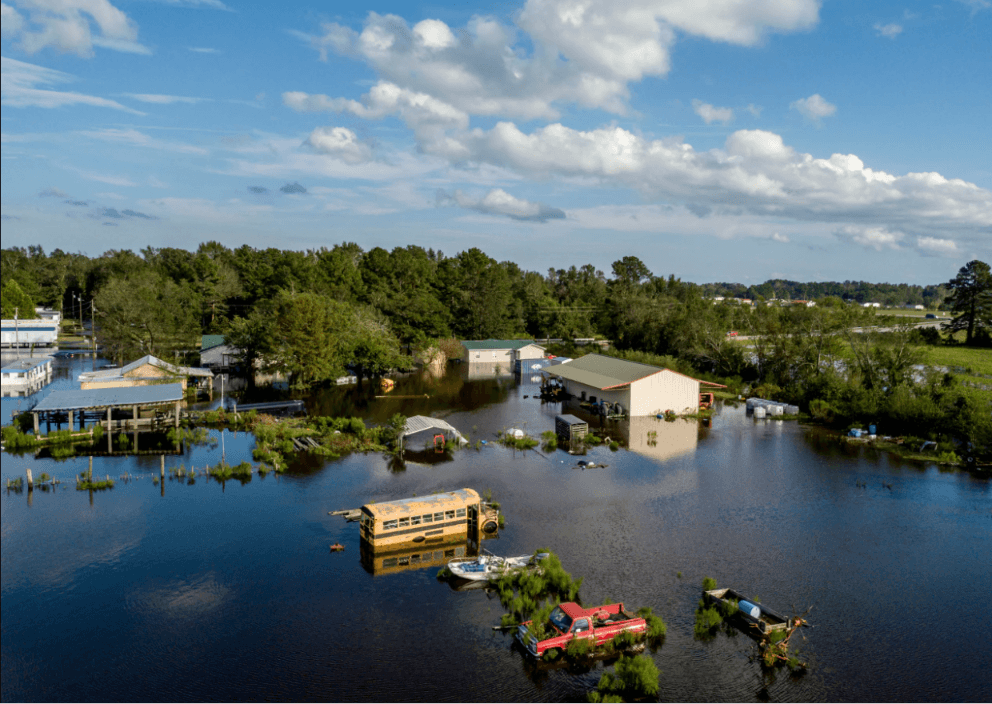
The bigger risk for vehicle owners is not actually the coastline. It is what happens inland. Southeastern North Carolina counties including Bladen, Columbus, Robeson, and Scotland sit on low, flat terrain where the Lumber, Little Pee Dee, and Cape Fear River basins act as funnels for tropical moisture. Even a weak tropical storm can turn into a catastrophic flood event if it stalls over the region, a pattern researchers now call a slow-motion disaster. Hurricane Helene in 2024 is the clearest recent example: by the time it reached western North Carolina, it had lost hurricane-strength winds entirely, yet it still caused some of the most severe flooding damage the region has seen in decades.
A storm does not need to be a major hurricane to total your car. A stalled tropical storm dropping heavy rain over an inland river basin can cause more flood damage to parked and driven vehicles than a fast-moving hurricane with much stronger winds.
How a Flood Title Actually Gets Assigned
Both North Carolina and South Carolina use the same basic threshold to determine when a vehicle gets branded as salvage: if the cost to repair the vehicle, including parts and labor, would exceed 75% of its fair market value before the damage, the state brands the title as salvage. If water is the specific cause, North Carolina goes a step further and brands the title “Water/Flood Damage Vehicle” directly, a designation that stays on the title permanently under North Carolina Administrative Code 19A NCAC 03C .0202. South Carolina applies a similar salvage flood designation under state law.
This brand is not cosmetic. It follows the vehicle through every future transfer, in every state, for the rest of its operational life. Federal law requires all states to report title brands to the National Motor Vehicle Title Information System, known as NMVTIS, specifically to stop a practice called title washing, where a flood-damaged car gets re-registered in a state with looser rules in an attempt to erase the brand. It is worth knowing that popular consumer services like Carfax and Experian are not approved NMVTIS providers, so a clean Carfax report alone does not guarantee a vehicle has never been flooded. Checking the official VehicleHistory.gov record is the more reliable step.
| Rule | North Carolina | South Carolina |
|---|---|---|
| Salvage threshold | Repair cost exceeds 75% of fair market value | Repair cost is 75% or more of fair market value |
| Flood-specific brand | “Water/Flood Damage Vehicle” on title | “Salvage Flood” designation |
| Path back to the road | Repair, pass NCDMV inspection, receive rebuilt-branded title | Repair, submit affidavit and documentation, receive salvage rebuilt title |
| Does the brand ever disappear? | No, permanent on the title record | No, permanent on the title record |
A Pending Change Worth Watching in South Carolina
South Carolina lawmakers are currently considering House Bill 4281, which would add new requirements for salvage, salvage flood, and salvage fire vehicles before they can receive a rebuilt title. Under the proposed language, owners would need to certify that the rebuilt vehicle is equipped with functioning safety features, including airbags, three-point restraint systems, and gas tank fuel-spill prevention devices, before the state issues a new title.
The bill has not passed as of this writing, so it is not yet the law in South Carolina. But if you are considering buying, keeping, or rebuilding a flood-damaged vehicle in South Carolina this hurricane season, it is worth tracking, since it could add compliance costs and documentation requirements to the rebuild process depending on when it takes effect.
What a Flood Title Does to Your Vehicle’s Value
The financial impact of a flood brand goes well beyond the immediate repair cost. Water exposure damages components that are not always visible during a basic inspection: corroded wiring harnesses, compromised airbag control modules, contaminated transmission fluid, and mold growth inside the cabin that can resurface months later. Buyers who understand vehicle history pricing know to discount flood-branded vehicles heavily, and lenders are frequently reluctant to finance them at all, since the long-term reliability risk is harder to quantify than a straightforward collision repair.
This is where flood titles and diminished value intersect in an important way. If your vehicle was not declared a total loss but experienced flooding severe enough to require significant repairs, or if your car has a clean title but sits in a used market saturated with flood-damaged inventory from a recent storm, understanding how vehicle history affects diminished value claims in the Carolinas becomes directly relevant to what you can recover.
After a major storm, thousands of flood-damaged vehicles typically enter the used car market from other regions. That increased supply of branded vehicles can put downward pressure on used car pricing broadly, even for buyers who are not purchasing a flood vehicle themselves.
What to Do Before and After a Flood Event
- If your vehicle floods, document everything immediately: photos of water lines inside and outside the car, the date and location, and any standing water still present.
- Contact your insurer promptly. Comprehensive coverage typically covers flood damage, but collision-only policies generally do not.
- If your insurer declares the vehicle a total loss, request the full valuation report before accepting a settlement. Insurers sometimes undervalue pre-storm market conditions, particularly in a year when regional used car pricing has already been volatile.
- If you are shopping for a used vehicle after a storm season, check the vehicle’s title history through official NMVTIS-connected sources, not just a standard Carfax report, before making an offer.
- If you are a South Carolina owner considering a rebuild, keep an eye on House Bill 4281 and confirm current requirements with the SCDMV before starting repair work.
The Bigger Picture for Carolina Drivers
A below-average storm count in 2026 is genuinely good news, but it is not a reason to treat hurricane season as a formality this year. The Carolinas’ specific geography, low-lying inland river basins prone to catastrophic flooding even from weakened storms, means the flood title risk here does not track neatly with the basin-wide forecast. One slow-moving storm is all it takes to total a driveway full of vehicles hundreds of miles from the coast.
Whether you are protecting a vehicle you already own or shopping the used market in the months after a storm, understanding exactly how flood titles work, and how they interact with diminished value, gives you a real advantage over drivers who find out the hard way.
Not Sure What Your Vehicle Is Worth After Storm Damage?
Get a free, no-obligation quote from the Carolinas’ most trusted diminished value appraisers, whether you’re dealing with flood damage, a total loss dispute, or a standard accident claim. Get Your Free Quote
Want to keep this analysis on hand? Download the PDF version of this article
Frequently Asked Questions
Does my car need to be underwater to get a flood title?
No. In both North Carolina and South Carolina, the flood or salvage brand is triggered once the estimated cost to repair the water damage reaches 75% or more of the vehicle’s fair market value. Partial submersion, especially if it affects the engine, transmission, or electrical systems, can be enough to cross that threshold.
Can a flood title ever be removed from a vehicle’s record?
No. Once a vehicle is branded as flood-damaged or salvage in North Carolina or South Carolina, that designation is permanent and follows the vehicle through every future title transfer, in any state, through the federal NMVTIS system. Repairing the vehicle can earn it a rebuilt-branded title, but the original flood history remains on record.
Is a below-average hurricane season forecast actually good news for the Carolinas?
Partially. Fewer named storms overall is a positive sign, but forecasters have specifically flagged the Carolinas as facing higher-than-average risk of direct impact in 2026, and the region’s inland river basins remain vulnerable to catastrophic flooding even from a single weakened storm, as Hurricane Helene demonstrated in 2024.
How can I check if a used car I’m considering has a flood history?
Check the vehicle’s record through VehicleHistory.gov, which pulls from the official National Motor Vehicle Title Information System. Standard Carfax or Experian reports are useful but are not approved NMVTIS providers, so a clean report from those services alone does not guarantee the vehicle has never been flooded.
Does homeowners or auto insurance cover flood damage to my car?
Comprehensive auto insurance coverage typically covers flood damage to your vehicle. Collision-only policies generally do not. Homeowners insurance does not cover vehicle damage regardless of the cause. If you are unsure what coverage you carry, confirming with your insurer before hurricane season peaks in September and October is worth the call.